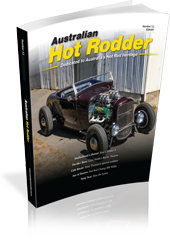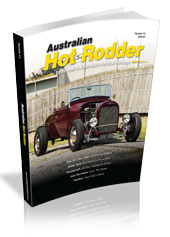


We signed off on the colour proofs of AHR #2 last week and it’s now full speed ahead at the printer’s, so we reckon it’s time to give you a preview of what’s coming in the next issue.
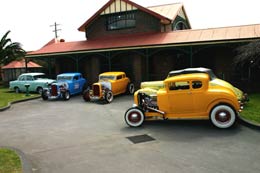
With the ’32 celebrating its 80th birthday this year we figured we just had to make a feature of the hot rod icon. The ’32 was launched in Detroit in late March 1932, but it wasn’t until August that year that Australians were able to sample the Deuce and its hot new V8 engine.
Less than 2000 Deuce passenger cars were produced by Ford Australia, almost two-thirds of them were V8s.
When our budding young hot rodders picked up their copies of HOT ROD magazine in the mid-1950s the car they saw featured more than any other was the ’32 and that was the one they wanted. Overnight the ’32 Ford was the most sought after old Ford of all, and it still is today.
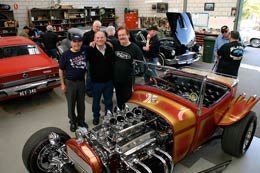
In the late-1950s Manny Azzopardi and Charlie Buhagiar were recent arrivals from Malta living in Sydney when they bought their first issue of HOT ROD and like so many others they instantly wanted a Deuce roadster.
The car they went on to build was one of the top show cars of the 1960s, winning a swag of trophies at shows between 1966 and 1972 when they sold it, never to see it again.
We managed to track Old Faithful down in its new home in South Australia, and shot it for our story on the great old car.
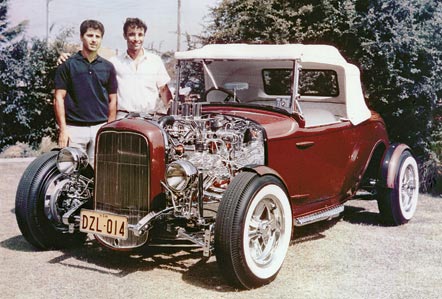
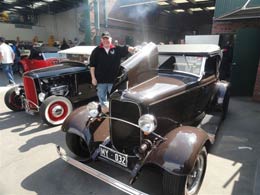
The famous Buhagiar/Azzopardi roadster is one of four Deuce roadsters featured in AHR #2, we also have stories on Kevin Daley’s beautiful channelled roadster, Ray Sprague’s hot racer, and the editor’s own highboy, but AHR #2 is not just about the ’32, there are also plenty of other great stories on hot rods and hot rodders.
Colin Bates has been building hot rods for a living since the early 1970s and is regarded as one of the best in the business.
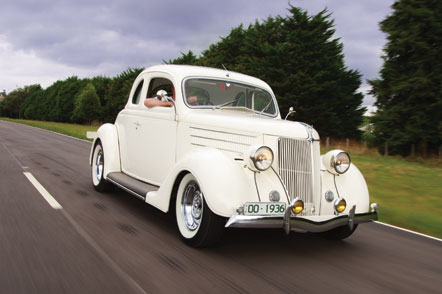
One look at his stunning ’36 Coupe that graces the cover of AHR #2 is enough to convince you of his ability to produce great hot rods.
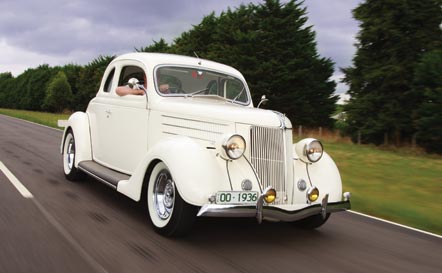
Colin believes that hot rods should be driven and there’s no better example of his commitment to building great driving cars than his ’36, which has won trophies at shows, performed on the drag strip, and done 150,000 km on the street.
Drag racing has always been a part of hot rodding, but never more so than in the 1960s when it was possible to race your everyday driver on the strip.
Back then Eddie Thomas was the ‘Big Daddy’ of drag racing with his home-built Chrysler-powered AA/D rail. No one did more than Eddie to promote drag racing and hot rodding in general until he retired from racing in 1968.
We tracked Eddie down for our story on this genuine Australian hot rodding legend.
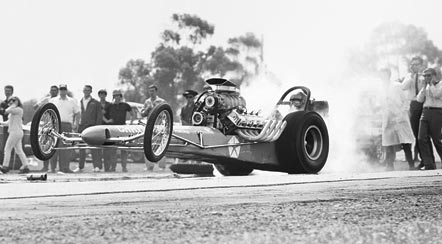
With 152 glossy, full colour pages, AHR #2 also features stories on Neil ‘Ned’ Kelly’s timeless ’35 coupe, Leno Pirotta’s old style ’34 coupe, Leo Spessot’s flamed ’40 convertible, and the re-created blown big-block AA/D rail driven by Bob Keith, the captain of the visiting American team in the 1966 Dragfest.
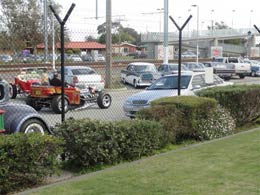
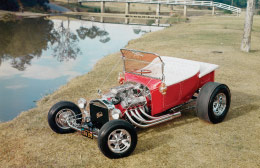 Norm Longfield never set out to build a stunning show-winning hot rod when he began the build of his ’23 T-bucket, but by the time he’d finished he had one of the most beautiful hot rods ever built in this country and a swag of show trophies
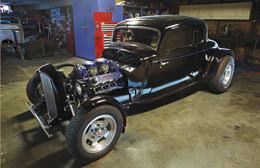 The hot rodding was shocked when in the 1980s Lynn Arrowsmith chopped his’34 coupe, considered to be one of the most beautiful cars built in the 1960s, but as he says he had always wanted to do it, he just didn’t know how when he first built it.
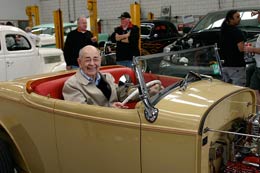
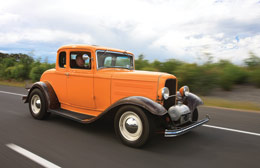 Ray Charlton is known far and wide for his passion for the ’32 Ford. He has owned more than 30 ‘Deuces’ and still professes his undying passion for them. Over 50 years or more the veteran hot rodder has built, shown and raced more ’32 Fords than anyone else in this country, and shows no sign of moving into the slow lane.
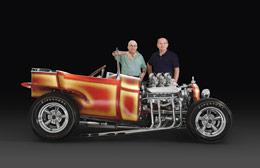 Few cars have had the impact that the “Crimson Pirate’ had on Australian hot rodding. Built in the early 1960s by Joe Pirotta and Charlie Caruana the Model A bucket swept the show scene on its debut, taking a haul of trophies everywhere it went. After it finished on the show circuit it virtually vanished, until Australian Hot Rodder found it buried in Charlie Caruana’s garage and convinced him and Joe Pirotta that it should be returned to the spotlight as the cover car on our first issue.
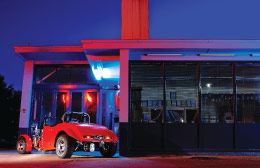 Channelling defined hot rodding in the 1960s. Young hot rodders all over the country were using the technique to achieve a lower, sportier look for their old Fords. When John Bowker built his classic ’34 roadster in the early 1960s it was only natural that he channelled it